They are among the most popular hand drums worldwide, each offering unique sounds and cultural backgrounds. They are widely chosen by beginners and experienced percussionists alike for their versatility and distinct tones.
The djembe stands out for its powerful and versatile sound rooted in West African tradition, the cajón is prized for its portability and rich, box-like rhythm, and congas provide deep, resonant tones essential to Afro-Cuban music styles. Together, they cover a broad range of musical applications and playing techniques.
Understanding these drums helps musicians select the right instrument to match their style and needs. Exploring their differences and similarities offers insight into why these drums remain central in many musical traditions today.
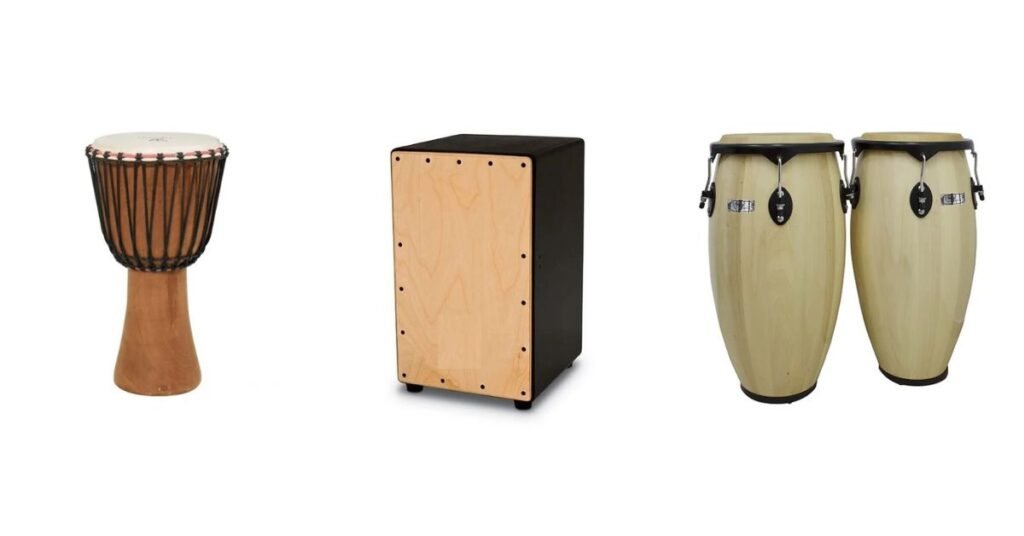
Overview of These Instruments.
These three drums differ significantly in origin, design, and sound. Each offers unique playing techniques tied closely to their cultural background and physical construction.
Origin and History of Key Drums
The djembe originates from West Africa, particularly from the Malinke people of Mali. It has been used for centuries in ceremonies and communal gatherings. The drum plays a central role in traditional African music.
The cajón comes from Peru, developed by African slaves as an alternative to traditional drums. It evolved into a box-shaped percussion instrument combining African and Latin influences.
Congas trace their roots to Cuba, influenced by African drum traditions brought over by enslaved peoples. They are essential in Afro-Cuban music, salsa, and Latin jazz.
Construction and Materials
The djembe is carved from a single piece of hardwood, often from trees like lenke or mahogany. Its head is made from goat skin, stretched tight to produce sharp, clear tones.
The cajón is a wooden box typically made from thin plywood. It has a striking surface on the front called the tapa and sometimes includes internal snare wires for additional buzzing sounds.
Congas are tall, cylindrical drums crafted from wood or fiberglass. The skins are usually cowhide, mounted with metal hardware to allow tuning by tightening or loosening the drumhead.
Distinctive Sounds and Playing Techniques
The djembe produces a wide range of tones, from deep bass to sharp slaps, played with bare hands. It is known for being loud, making it suitable for outdoor performances.
The cajón delivers deep, resonant bass notes when struck in the center, and snappy, high-pitched slaps when hit near the edges. Players often sit on it and use their hands to trigger multiple rhythms.
Congas offer rich, warm tones with a complex rhythmic range. Players use fingertips, palms, and heels of the hand to create open tones, slaps, and muted sounds, crucial in Latin percussion ensembles.
Exploring Cultural Influence and Modern Use
These instruments have distinct cultural roots that have shaped their roles in world music. Their rhythmic patterns and sounds have integrated into many genres and performance styles, influencing both traditional and contemporary musicians.
Global Impact on Music Genres
The djembe, originating from West Africa, has deeply influenced world music. Its versatile tones appear in genres like Afrobeat, jazz, and pop. The djembe’s complex rhythms provide a foundation for many fusion styles, blending African heritage with modern beats.
The cajón, from Peru, gained prominence in flamenco before expanding into jazz, blues, and even rock. Its portable design and deep, resonant sound make it a favored percussion choice in acoustic and small ensemble settings.
Congas, rooted in Afro-Caribbean culture, are essential in salsa, mambo, and Latin jazz. Their distinctive rhythms have shaped dance music globally, emphasizing syncopation and groove that drive many popular genres.
Role in Ensembles and Solo Performance
In ensemble settings, the djembe often leads call-and-response patterns, providing both rhythm and interaction among musicians. It can also serve as a solo instrument, showcasing intricate hand techniques and dynamic range.
The cajón is prized for its ability to mimic a full drum kit, making it central in acoustic bands and street performances. Players use both hands and fingers to create bass tones and sharp slaps, adding texture without overwhelming other instruments.
Congas typically anchor rhythm sections but allow for solos that highlight technical skill. They interact closely with bongos and timbales in percussion ensembles, driving the energy of live dance and concert settings.
Contemporary Musicians and Trends
Modern percussionists blend traditional rhythms with electronic music, hip-hop, and world fusion. Artists often incorporate the djembe’s rich history while experimenting with digital effects.
Cajón players increasingly appear in diverse musical contexts, from indie folk to experimental jazz. The instrument’s adaptability fuels its popularity among contemporary musicians looking for both tradition and innovation.
Congas continue to evolve as they integrate with global sounds. Prominent drummers use them in studio recordings and live shows, highlighting their enduring relevance and dynamic character in modern productions.

Conclusion
They are more than just percussion instruments — they represent living traditions that continue to inspire musicians worldwide. Each drum carries a cultural identity that has shaped its sound, playing style, and role in music. From West African ceremonies to Afro-Cuban rhythms and Peruvian street performances, these instruments have transcended borders and remain central to the global language of rhythm.
In modern contexts, their versatility has allowed them to find a home in jazz, pop, flamenco, and fusion, bridging traditional roots with contemporary creativity. Musicians value the djembe’s dynamic range, the cajón’s portability and adaptability, and the congas’ rich, resonant voice that anchors ensembles. Their integration into diverse genres highlights not only their sonic appeal but also their ability to connect cultures through music.
For beginners and professionals alike, exploring these drums provides artistic growth and cultural enrichment. Whether used for solo expression, group performances, or experimentation with modern sounds, they remain timeless instruments that embody rhythm, tradition, and innovation.They are proof that percussion is not only about keeping time, but also about telling stories and creating connections that resonate across generations.
You might also like to read about: The role of percussion in orchestral and popular music.
FAQ
1. What makes the djembe unique compared to other drums?
It stands out for its wide tonal range, producing deep bass, clear tones, and high-pitched beats, all with bare hands. Its roots in West African traditions give it a strong cultural and rhythmic identity.
2. Is the cajón suitable for beginners?
Yes. It’s often recommended for beginners because it’s easy to play, highly portable, and versatile enough to mimic the sound of a full drum kit in acoustic settings.
3. What kind of music are congas most commonly used in?
They are essential in Afro-Cuban genres such as salsa, rumba and mambo, but are also widely used in Latin jazz, pop and fusion styles.
4. Can these drums be played in modern music genres?
Absolutely. They have all found a place in contemporary genres like pop, jazz, rock, and even electronic music, thanks to their unique tones and adaptability.
5. Do I need special training to play these drums?
While professional lessons can help refine technique, many players start learning by ear or through online tutorials. Each drum has basic rhythms that are beginner-friendly but can also be mastered for complex performances.
6. Which drum is best for solo performance?
All three can be used for solo playing, but the djembe is particularly known for its ability to fill space with dynamic rhythms, making it an excellent choice for solo performance.
7. Are these drums expensive to buy?
Prices vary depending on size, materials, and craftsmanship. Djembes and cajóns can often be found at affordable beginner levels, while high-quality congas tend to be more expensive due to their size and construction.
8. How do I maintain these instruments?
Maintenance usually involves keeping the drumheads in good condition, avoiding exposure to extreme humidity or heat, and occasionally tuning the skins. Wooden cajóns should also be protected from cracks by storing them in stable environments.
See more about this these instruments.